You know what’s exhausting? Scrolling through LinkedIn and seeing yet another “entrepreneur” with a lion in their profile picture, calling themselves the king of their jungle, posting the same recycled quotes about dominance and grinding.
The lion has become the participation trophy of business metaphors—handed out to everyone who wants to feel like an alpha without actually doing the work of becoming one.
I’m looking at you, “Online Lion” types (On-Lion’s?). The rapist jerkoffs and wannabe gurus who’ve latched onto this imagery because it sounds tough, looks good on a motivational poster, and requires zero original thought.
Here’s the truth: if you actually understood what makes a successful entrepreneur, you’d pick the tiger.
Let me break down why the tiger isn’t just a better analogy—it’s the only honest analogy for people who build real businesses instead of personal brands built on bullshit.
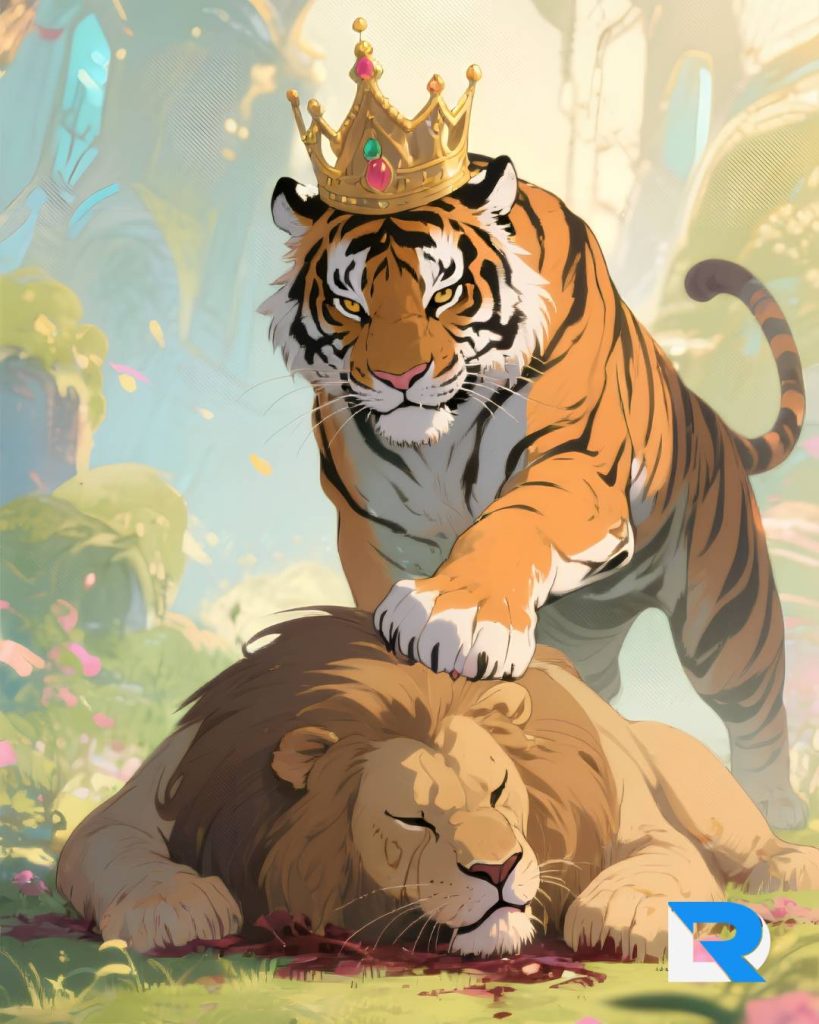
The Solitary Hunter vs. The Pack Dependent
Let’s start with the most obvious difference that somehow everyone ignores:
Lions live in prides. And not just any prides—the females do 90% of the hunting while the male sits around looking impressive, occasionally fighting off rivals, and eating first despite contributing the least. When a male lion does hunt, it’s often with backup from the pride. Strip away that support system, and a male lion becomes surprisingly ineffective at the most basic requirement of survival: feeding itself.
Tigers hunt alone. Every single kill, every strategy, every success is earned individually. A tiger doesn’t have a support system to fall back on—it figures shit out or it starves. There’s no delegating the hard parts. There’s no taking credit for someone else’s work. It’s pure execution or pure failure.
The Business Reality
Most entrepreneurs—especially in the early days—are tigers, not lions.
You’re not leading some massive team with a built-in support structure. You’re grinding alone at 2 AM, learning alone through failed campaigns and lost clients, failing alone when the revenue doesn’t come in, and succeeding alone when you finally crack the code on what works.
When I started Planet 8 Digital, I wasn’t some king surveying my kingdom. I was a tiger in the weeds, figuring out client acquisition, service delivery, operations, accounting, legal, marketing—all of it—because there was nobody else to do it. And if you’re honest about your journey, you were too.
The “lion king” metaphor falls apart the moment you realize that business isn’t about roaring the loudest at networking events. It’s about executing when no one’s watching, no one’s cheering, and no one gives a shit if you succeed or fail except you.
The people who actually build something worth having? They’re tigers. The people who talk about building something? They’re lions—loud, performative, and dependent on others to do the real work.
Adaptability vs. Status Quo
Here’s where the metaphor gets really interesting:
Lions stick to the same territory, the same hunting grounds, the same playbook. They’re apex predators in one specific environment—the African savanna. That’s it. Drop a lion in a jungle, a swamp, a mountain range, or any environment that’s not wide-open grassland, and it’s completely screwed. Lions haven’t evolved to adapt; they’ve evolved to dominate one specific ecosystem.
Tigers live everywhere. Siberian tundra where temperatures hit -40°F. Tropical jungles with dense vegetation. Mangrove swamps. Grasslands. Mountains. Tigers have adapted to wildly different environments and figured out how to dominate in each one. That’s not just survival—that’s strategic evolution. That’s learning new rules, new tactics, new approaches based on changing circumstances.
The Business Reality
Markets change. Technology shifts. Consumer behavior evolves. Algorithms get updated. Economic conditions fluctuate. Platforms rise and fall.
The businesses that survive aren’t the ones that roar about being “king”—they’re the ones that adapt, pivot, and figure out new ways to win when the landscape changes.
Think about Blockbuster vs. Netflix. Blockbuster was the lion—king of video rentals, dominant in its territory, comfortable with its model. Then the environment changed. Blockbuster kept doing what made it king, stuck to its territory, and died.
Netflix? Tiger. Started with DVD mail rentals, pivoted to streaming, then pivoted again to content creation. Same company, completely different strategies as the environment demanded evolution.
Or look at the marketing industry right now. AI is fundamentally changing how content gets created, how campaigns get optimized, how data gets analyzed. The lion agencies—the ones who built their empires on cheap offshore labor doing template work—are getting exposed. The tiger agencies—the ones adapting, integrating AI as a force multiplier while doubling down on strategy and relationships that AI can’t replace—are thriving.
I’ve watched agencies at ServMark’s clients leave get bought out by private equity, try to scale the same playbook across different markets, different industries, different client needs, and completely fail because they couldn’t adapt. They were lions dropped in a jungle, and they starved.
Adaptability isn’t a nice-to-have in modern business. It’s the entire game.
Stealth and Strategy vs. Loud and Lazy
Lions are loud as hell. You can hear a lion’s roar from five miles away. The entire point is intimidation and presence—announcing dominance, marking territory, making sure everyone knows they’re there.
But here’s the thing: being loud doesn’t make you effective. It just makes you… loud.
Tigers are silent killers. A 400-pound tiger can get within 20 feet of its prey without making a single sound. They study patterns, they wait for the right moment, they strike with precision. No wasted energy, no announcement, just execution. By the time you know a tiger is there, it’s too late.
The Business Reality
The loudest person in the room is rarely the most successful.
Real entrepreneurs—real operators—don’t need to announce every move on social media. They’re too busy building, testing, iterating, and closing deals. They’re studying their market, understanding their customers, refining their product, and executing their strategy.
The “Digital Lion” types? The ones with the podcast where they interview other “lions” about their “journey”? The ones posting daily motivational content about being an alpha? They’re compensating.
If you have to tell everyone you’re the king, you’re probably not.
I see this constantly in the digital marketing space. The agencies doing the best work—getting real results, retaining clients for years, building actual businesses—are almost invisible on social media. They’re too busy doing the work. The agencies screaming about being “#1” and “dominating” their niche? They’re the ones with 90% client churn because they’re better at selling than delivering.
Some of the most successful entrepreneurs I know have fewer than 1,000 LinkedIn connections. Some of the biggest frauds I know have 30,000+ and post three times a day.
Noise and results are inversely correlated.
Work Ethic Reality Check
Let’s talk about something nobody mentions when they’re glorifying lions:
Male lions sleep 18-20 hours a day. Seriously. They conserve energy and rely on the pride—specifically the females—to handle the heavy lifting. When they do work, it’s in short, intense bursts, usually fighting other males or mating.
Tigers are active, engaged, constantly on the move. They cover massive territories—up to 400 square miles for males—and are hands-on with every aspect of their survival. They’re hunting, patrolling, marking territory, raising cubs (yes, male tigers actually participate in raising their young), all while maintaining awareness of their environment.
The Business Reality
Which one actually sounds like an entrepreneur?
The person coasting on their “king” status, delegating everything, showing up for the glory moments and letting others do the real work?
Or the person putting in the hours, covering all bases, staying relentlessly active, and personally ensuring every critical function gets handled correctly?
When I look at the businesses that have survived 5, 10, 15+ years, they’re run by tigers. People who are still in the weeds even when they don’t have to be. People who know every aspect of their operation because they built it themselves. People who work on their business because they never stopped working in their business long enough to lose touch with what actually matters.
The lion entrepreneurs? They flame out. They scale too fast, lose touch with operations, delegate to the wrong people, and wake up one day to discover their kingdom has collapsed while they were napping.
Success isn’t about working the least. It’s about working smart, working hard, and never getting so comfortable that you stop paying attention.
Authentic Strength vs. Performative Dominance
Here’s a fun fact that destroys the entire lion superiority complex:
Pound for pound, tigers are actually stronger than lions. They’re also better swimmers, better climbers, more agile, and more versatile fighters. In the rare documented cases where tigers and lions have fought (usually in captivity), tigers win the majority of encounters.
But you wouldn’t know that from the imagery. The lion has the mane, the roar, the whole presentation—it’s largely for show. Sure, lions are powerful, but a lot of their dominance is about appearing dominant to avoid actual conflict. It’s theater.
Tigers don’t have that presentation layer. Their strength isn’t for show—it’s functional. Every muscle, every adaptation, every capability exists because it’s useful for survival, not because it looks impressive.
The Business Reality
There’s a massive difference between people who look successful and people who are successful.
The “look successful” crowd:
- Luxury car leases
- Rented office space with expensive furniture
- Instagram photos in first class (bought with points)
- Designer clothes
- Speaking gigs at conferences nobody’s heard of
- Online courses teaching you how to build online courses
The “are successful” crowd:
- Profitable businesses with real customers
- Equity they actually own
- Sustainable growth they can maintain
- Systems that work without them
- Clients who stay for years
- Time freedom they don’t feel the need to broadcast
I’ve consulted with both types. The “look successful” people are usually 90 days from bankruptcy and desperate for the next injection of cash from whatever they’re selling. The “are successful” people are usually understated, humble, and genuinely helpful because they’re not protecting a fragile image.
Tigers don’t need to prove anything. Lions can’t help but perform.
When someone leads with their status, their possessions, their “empire,” I immediately start looking for the cracks. Because truly successful people don’t build their identity around convincing you they’re successful—they’re too busy being successful.
Territory vs. Range: How You Think About Your Market
Lions are territorial. They defend a specific area, fight off intruders, and operate within clearly defined boundaries. It’s about control and exclusivity—this is MY territory, stay out.
Tigers have ranges. They move through massive areas, adapt to different conditions within that range, and are more concerned with effectiveness than control. They’re not trying to dominate every square inch—they’re trying to thrive across diverse terrain.
The Business Reality
The lion mindset leads to:
- Obsessing over competitors
- Trying to “own” a niche through aggressive positioning
- Defensive strategies focused on protecting what you have
- Zero-sum thinking (if they win, I lose)
- Lawsuit-happy behavior over perceived territory violations
The tiger mindset leads to:
- Focusing on your own execution
- Adapting your approach to different market segments
- Growth strategies focused on expanding capabilities
- Abundance thinking (there’s room for multiple winners)
- Collaboration and strategic partnerships
I see this play out constantly. The lion agencies spend more time and money on competitive intelligence, legal threats, and trash-talking competitors than they do on improving their service. The tiger agencies barely think about competitors—they’re too focused on serving clients better and expanding into new capabilities.
Your competition isn’t your enemy. Mediocrity is your enemy. And you beat mediocrity through execution, not intimidation.
The Longevity Question
Male lions have a short reign—typically 2-3 years before they’re overthrown by younger, stronger males. The entire structure is built on constant conflict and replacement.
Tigers can live 10-15 years in the wild, maintaining their territory and effectiveness throughout. They age with experience, getting smarter and more efficient over time.
The Business Reality
How many “king” entrepreneurs have you seen flame out spectacularly? How many hot startups with lion-energy founders crashed and burned within 3-5 years?
The performative dominance model isn’t sustainable. The loud, aggressive, conquer-everything approach burns people out—both the entrepreneur and everyone around them.
The businesses that last decades? They’re run by tigers. People who:
- Pace themselves for a long game
- Build systems that improve with age
- Develop wisdom through experience
- Stay adaptable as they grow
- Focus on sustainable advantage, not flashy dominance
Planet 8 and ServMark have survived and grown because I’m not trying to be the biggest or the loudest. I’m trying to be the most effective, the most adaptable, and the most valuable to my clients over the long term. That’s tiger thinking.
The Modern Context: Why This Matters Now
Here’s why this metaphor matters for any entrepreneur trying to cut through the noise in 2025:
The “lion mentality” has been completely co-opted by scammers, grifters, and snake oil salespeople. When someone leads with “I’m a lion” or uses lion imagery, I immediately wonder what they’re compensating for. It’s become a red flag for:
- Fake gurus selling courses on how to sell courses
- MLM recruiters pretending to be entrepreneurs
- “Hustle culture” burnout merchants who peaked at 32 and spent the next decade talking about it
- Performative entrepreneurs with no real results, just good marketing
- People who watched too many Gary Vee videos and think yelling equals leadership
The tiger, on the other hand, hasn’t been ruined yet. It represents:
- Independence – Building something real on your own terms
- Adaptability – Surviving and thriving through constant change
- Strategic thinking – Stealth over volume, precision over posturing
- Authentic strength – Results over reputation management
- Relentless execution – Doing the work, not just talking about it
- Longevity – Building for decades, not quarters
For someone like me—warning small business owners about private equity vultures buying marketing agencies and tanking quality, calling out cheap marketing scams that hurt businesses, preaching customer relationships over quick cash—the tiger fits perfectly.
I’m not trying to be the loudest voice in digital marketing. I’m trying to be the most effective, the most authentic, and the one who actually gets results for clients while helping business owners avoid the predatory bullshit in our industry.
The Fight Nobody Wants to Acknowledge
And just for fun: in actual documented fights between lions and tigers, tigers win the majority of encounters.
Tigers are bigger (Siberian tigers can weigh 700+ pounds vs. 550 for a large male lion), stronger, more agile, better armed (bigger claws, stronger bite force), and more experienced fighters (they don’t have a pride to back them up, so every fight matters).
The lion’s mane—that iconic symbol of dominance—is mostly for show. It protects against other lions during pride conflicts, but it doesn’t mean much against a tiger’s attack strategy.
So even in the literal matchup, the tiger wins.
The Bottom Line
The lion metaphor worked when business was about territorial dominance and hierarchical control. When companies were built to last forever in stable markets, when being the biggest meant being the best, when you could sit on top of your industry and defend your position through size alone.
That world is dead.
The modern business landscape rewards:
- Agility over size – The ability to move fast and pivot beats the ability to throw weight around
- Execution over posturing – Delivering results beats looking like you deliver results
- Authenticity over performance – Real expertise beats performative expertise every single time
- Strategic silence over loud mediocrity – Quiet competence beats noisy incompetence
- Adaptation over dominance – Evolving with the market beats trying to control the market
- Independence over hierarchy – Self-sufficiency beats dependent structures
That’s tiger territory.
So yeah, let the “On-Lion’s” and hustle-porn peddlers keep roaring into the void, posting their motivational quotes, and selling courses to other aspiring lions.
Real operators know the truth: in a world that changes this fast, the tiger doesn’t just beat the lion—it’s not even close.
And if we’re being completely honest? The tiger would win that fight anyway.